 01246 277 271
Monday - Skills for Life
Skills for Life: It all starts with skills
Whether you’re growing your business, changing your career or just starting out, it all starts with skills.
The Department for Education’s campaign invites young people, adults and businesses to make the most of their potential by engaging in a range of government skills and technical education offers.
‘It all starts with skills’ aims to motivate people to explore their options, make informed choices, and gain the skills and qualifications they need to progress.
Inspiring action, the campaign promotes a range of priority skills programmes, such as:
- Apprenticeships
- T-Levels
- Essential skills (English, maths and digital)
- Support and advice from the National Careers Service
To find out more about Skills for Life, please visit: https://
Hard and Soft skills
Apprenticeships combine practical training with theoretical knowledge, requiring a blend of ‘hard and soft skills’ for success.
What are the differences between soft skills and hard skills?
Hard skills are teachable learned through education and training, such as technical proficiency and medical skills.
Soft skills are personal attributes that affect how individuals interact and adapt, including communication, teamwork and problem-solving.
The main difference is soft skills are all about you as a person and hard skills are role/industry focused.
Why are they important?
Hard skills ensure apprentices are technically competent and meet industry standards, forming the foundation of their careers. Soft skills enhance interpersonal interactions, adaptability, and collaboration, which are crucial for a positive work environment.
Hard skills and soft skills are essential for apprentices. Their combination prepares apprentices for successful careers, equipping them to meet modern workforce demands. In the graphic below we have included examples of the different skills and current examples from our apprentices.
Tuesday - Employer Tuesday
As the largest employer in North Derbyshire, the Trust is committed to actively contribute to employment in the area.
Our award-winning Learning and Development Team help to support training and career pathways across the Trust.
Staying up to date with training and supporting colleagues to progress within their roles helps us to continue to provide exceptional care for our patients.
They also support apprenticeships and work experience - both for our colleagues and external candidates.
There's a huge variety of apprenticeships available, that offer routes into several roles.
As a Trust we use also use career pathways to give our apprentices a long-term outlook on the training they're completing. These have been provided to us by Health Apprenticeship Standards Online (HASO).
Meet Neil
Neil is the Digital Learning Manager at our Trust and acted as a Line Manager to one of our apprentices:
“As the Digital Learning Manager, I seek apprentices who show genuine interest, enthusiasm, adaptability, and good communication skills. These qualities are essential for working with both clinical and non-clinical staff. I believe that while having all the necessary skills isn't crucial, the apprenticeship journey is an opportunity to develop these traits.
“To support apprentices, I provide a structured development plan, regular training sessions, and opportunities to shadow different departments. They have protected learning time and access to online resources and mentors. I give constructive feedback through frequent one-to-one meetings, using the "sandwich" approach to balance positive observations with areas for improvement.
“Integrating apprentices into the team and company culture is a priority. From day one, they are included in team meetings, assigned a mentor, and involved in cross-departmental projects. I ensure they participate in both formal and informal team activities and assign meaningful projects that contribute to our team’s goals. I address challenges like adjusting to the professional environment and balancing learning commitments through coaching and clear guidance.”
Available apprenticeships are advertised on our Current Vacancies page, on the NHS jobs website and on gov.uk.
If you would like to explore any specific apprenticeships, then please don't hesitate to get in touch with the team on crhft.
Wednesday - Apprentice Wednesday
What is an apprentice?
An apprenticeship is a paid job where the employee learns and gains valuable experiences.
Alongside on-the-job training, apprentices spend at least 20% of their working hours completing classroom-based learning with a college, university or training provider which leads to a nationally recognised qualification.
How can I become an apprentice at CRH?
Earn, learn and make a difference as an apprentice at #TeamCRH.
There's a huge variety of apprenticeships available, that offer routes into several roles. Our website hosts a full list of different areas and levels that we offer: Apprenticeships :: Chesterfield Royal Hospital.
As a Trust we use also use career pathways to give our apprentices a long-term outlook on the training they're completing. These have been provided to us by Health Apprenticeship Standards Online (HASO).
Available apprenticeships are advertised on our Current Vacancies page, on the NHS jobs website and on gov.uk.
If you would like to explore any specific apprenticeships, then please don't hesitate to get in touch with the team on crhft.
Case Studies
Meet Sinead
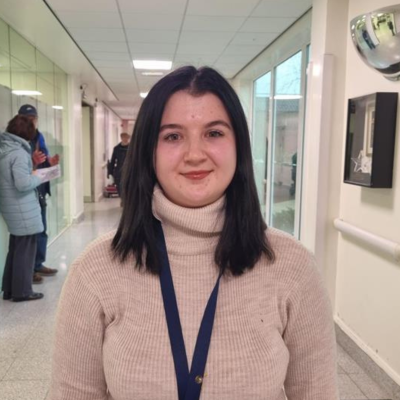
Level 4 Associate Project Manager Apprentice
About Sinead
Sinead previously completed a Level 3 Business Administration apprenticeship, where she delivered a successful project to improve services for carers. That experience ignited a passion for project management and inspired her to progress to the Level 4 programme. Her next ambition is to lead improvements for cancer patient services.
Best part of the apprenticeship
Sinead loves the opportunity to make a difference through practical project work and to see real impact across the Trust.
Why she chose an apprenticeship
Her earlier apprenticeship experience gave her confidence, clear direction and a desire to work on larger, more meaningful projects that benefit patients and staff.
Hopes for the future
She hopes to progress to Associate Project Manager and ultimately become a Project Manager driving major service improvements.
Most challenging part
Balancing her studies with her existing careers‑related responsibilities, though she says the challenge is worth it.
Sinead’s advice
“I would 100% recommend it. I started my first apprenticeship at 16, and I’ve achieved so much since then — that’s why I’m now doing Level 4.”
Read Sinead's full profile here.
Meet Chloe
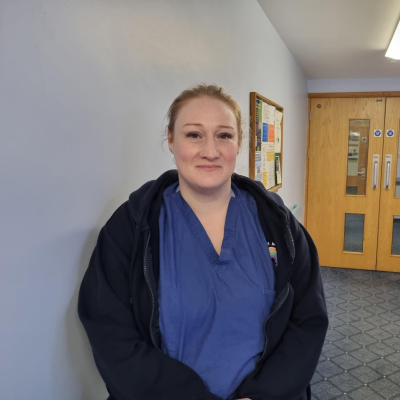
Operating Department Practitioner (ODP) Apprentice, Level 6
About Chloe
Chloe works in a fast‑paced clinical environment supporting patients before, during and after surgery. With four children and shift work, she balances study, family life and professional responsibilities — a challenge that has strengthened her organisation, resilience and confidence.
Best part of the apprenticeship
She enjoys applying theory directly to clinical practice, learning from experienced theatre practitioners, and feeling part of a supportive multi‑disciplinary team.
Why she chose an apprenticeship
Chloe wanted a professional healthcare qualification while continuing to earn and support her family. Her interest in hands‑on patient care grew after joining theatres in 2021 as a support worker.
Hopes for the future
She aims to become a confident, competent practitioner with strong communication skills and a broad understanding of all areas of perioperative practice.
Most challenging part
Managing academic deadlines around shift work and family commitments, as well as the pressure of the clinical environment.
Chloe’s advice
“Go for it! I never dreamed I’d be able to go to university — but here I am. It takes hard work, but the rewards and opportunities are worth it.”
Read Chloe's full profile here.
Meet Tegan
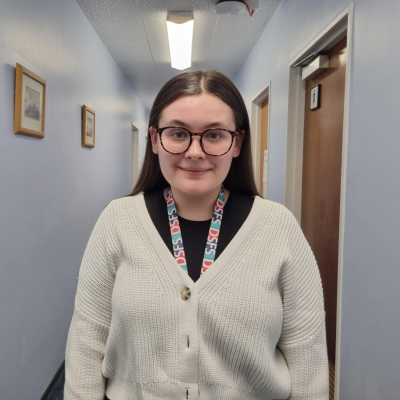
AAT Level 4 Diploma in Professional Accounting Apprentice
About Tegan
Tegan joined the Trust after the pandemic disrupted her GCSE plans in 2020. A work experience placement in a bank sparked her interest in finance, which led to an apprenticeship in Patient Accounts. Since then, she has progressed through AAT Levels 2 and 3 and is now completing Level 4 while on secondment as a Management Accountant.
Best part of the apprenticeship
She values the confidence, skills and knowledge gained from learning both academically and practically. Tegan says she is “a different person” compared to when she started in 2020.
Why she chose an apprenticeship
It offered a way to gain qualifications during a time when traditional career paths were limited due to Covid. She was determined to push herself, build confidence and gain experience.
Hopes for the future
Tegan wants a broad understanding of finance that allows her to continue progressing in her career with confidence.
Most challenging part
Balancing full‑time work with study, especially around exam periods, but she says the process teaches invaluable time‑management skills.
Tegan’s advice
“Go for it! Apprenticeships have taken me further than I ever expected — I’ve gained qualifications, confidence and opportunities I once thought were out of reach.”
Read Tegan's full profile here.
Meet Vincent
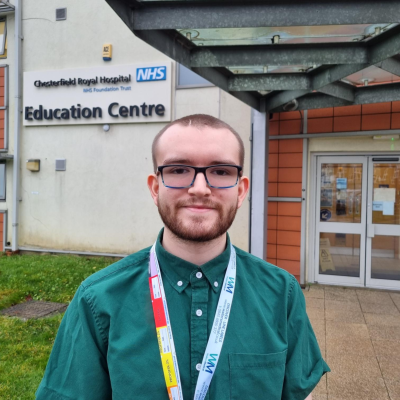
Level 3 Business Administration Apprentice
About Vincent
Vincent joined the apprenticeship programme after completing an internship with Project SEARCH, which helped him discover what kind of work he enjoyed and what direction he wanted to take. Wanting to contribute through employment but not yet ready for the full responsibilities of a permanent role, he chose an apprenticeship to build skills, confidence and future career options.
Best part of the apprenticeship
He enjoys the constant learning and personal growth the apprenticeship provides, helping him develop both professionally and personally.
Why he chose an apprenticeship
Vincent wanted structured development, real work experience and the chance to keep his career pathways open. His internship experience showed him the value of gaining practical skills while still having guided support.
Hopes for the future
By the time he completes his apprenticeship, Vincent hopes to have achieved a distinction and to have developed the skills, qualities and confidence needed for a full‑time administrative role with greater responsibility.
Most challenging part
Managing workload across two different teams alongside his apprenticeship studies has been the biggest challenge — but also a key part of his development.
Vincent’s advice
“Apprenticeships are a great developmental opportunity, especially if you're unsure what you want to do — there’s plenty of support. If you’re thinking about doing one, I’d say go for it!”